Roman Amphitheater<p>Perched on the slope of the hill upon which the city was built, with the <strong>Mediterranean Sea</strong> as a backdrop, the <strong>Amphitheatre of Tarraco</strong> is an elliptical building constructed in the early <strong>2nd century AD</strong>. This mixed-structure work takes advantage of the natural rock slope to carve out part of the seating area (<em>cavea</em>), while the rest rises on concrete vaults to accommodate some <strong>14,000 spectators</strong>. The arena was the stage for famous <strong>gladiator fights</strong> and beast hunts (<em>venationes</em>)—professional spectacles where, contrary to cinematic myths, death was not always the mandatory end, and the fate of the defeated was decided through precise codes of surrender. The monument's history took a dramatic turn in <strong>259 AD</strong> with the martyrdom of <strong>Bishop Fructuosus</strong> and his deacons, who were burned alive in the center of the arena. This event sanctified the space, leading to the later construction of a <strong>Visigothic basilica</strong> and the 12th-century Romanesque church of <strong>Santa Maria del Miracle</strong>, the ruins of which remain visible in the heart of the arena today.</p>https://rutes-content.tarragona.cat/en/amfiteatre-romahttps://rutes-content.tarragona.cat/@@site-logo/logo_aj_tgna.png
Roman Amphitheater
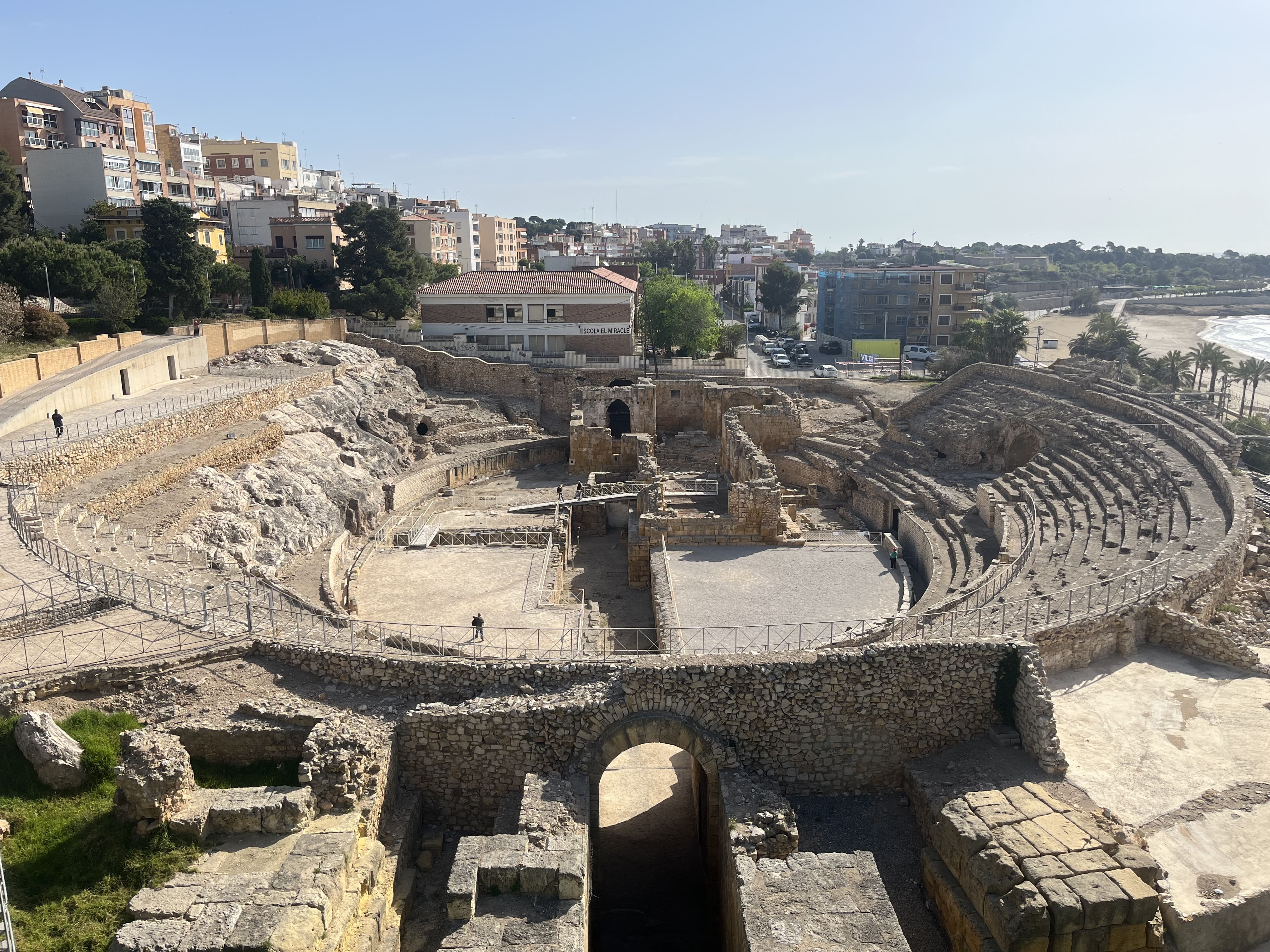
<p>Perched on the slope of the hill upon which the city was built, with the <strong>Mediterranean Sea</strong> as a backdrop, the <strong>Amphitheatre of Tarraco</strong> is an elliptical building constructed in the early <strong>2nd century AD</strong>. This mixed-structure work takes advantage of the natural rock slope to carve out part of the seating area (<em>cavea</em>), while the rest rises on concrete vaults to accommodate some <strong>14,000 spectators</strong>. The arena was the stage for famous <strong>gladiator fights</strong> and beast hunts (<em>venationes</em>)—professional spectacles where, contrary to cinematic myths, death was not always the mandatory end, and the fate of the defeated was decided through precise codes of surrender. The monument's history took a dramatic turn in <strong>259 AD</strong> with the martyrdom of <strong>Bishop Fructuosus</strong> and his deacons, who were burned alive in the center of the arena. This event sanctified the space, leading to the later construction of a <strong>Visigothic basilica</strong> and the 12th-century Romanesque church of <strong>Santa Maria del Miracle</strong>, the ruins of which remain visible in the heart of the arena today.</p>