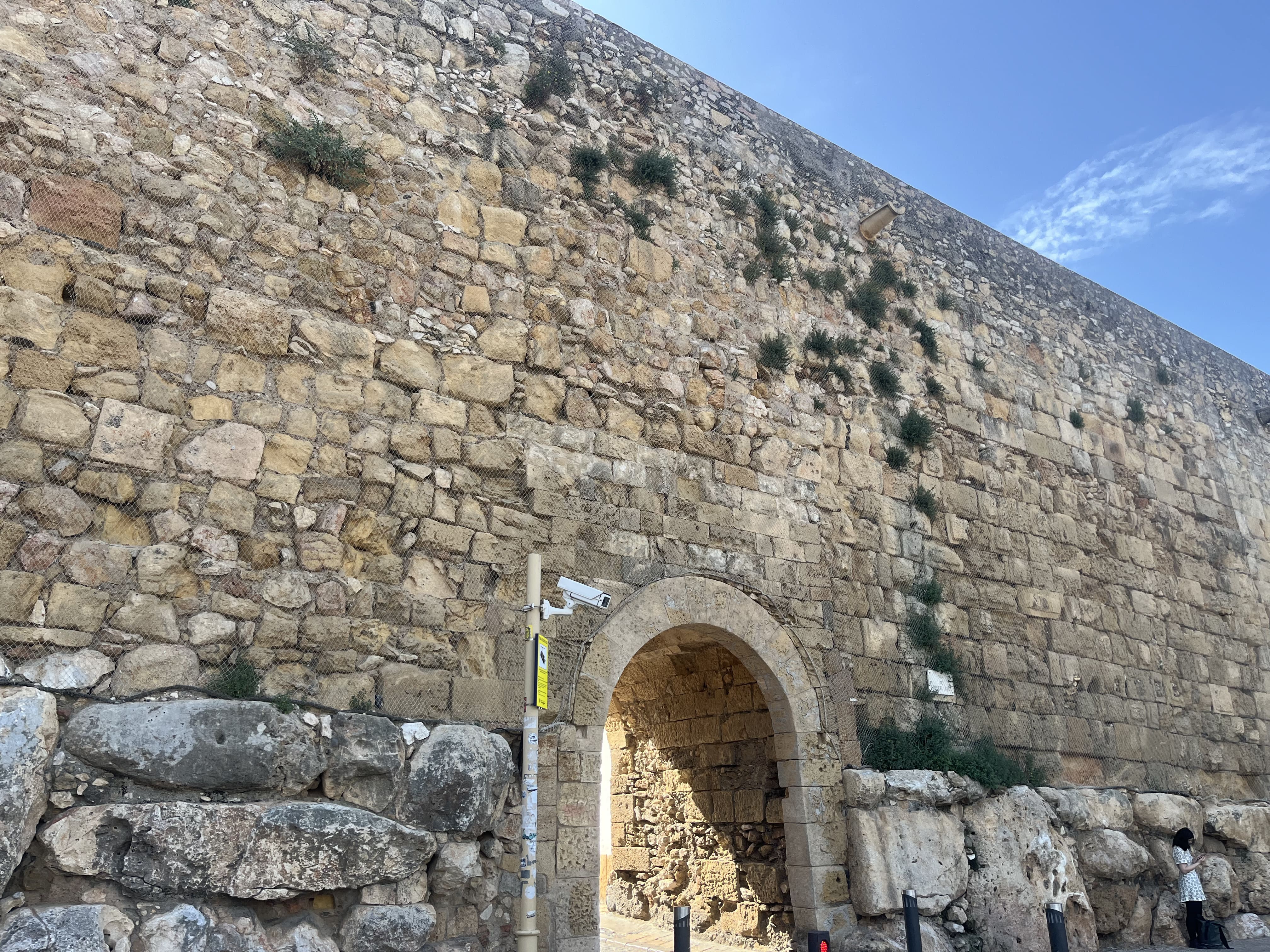
Roman Wall<p>The <strong>Walls of Tarragona</strong> are the largest and oldest Roman monument on the Iberian Peninsula. Construction began in the late <strong>3rd century BC</strong>, during the Second Punic War, and was expanded in the <strong>2nd century BC</strong> to a perimeter of 3.5 km. The structure is notable for its <strong>megalithic base</strong> of large stones and its <strong>rusticated ashlars</strong> of Mèdol stone, assembled dry without mortar. Key features include the towers of the Archbishop, the Seminary, and the <strong>Minerva Tower</strong>, which houses the oldest Roman relief and Latin inscription in the Peninsula. A <strong>UNESCO</strong> World Heritage site since <strong>2000</strong>, the walls have protected the Part Alta for over two millennia, adapting to medieval and modern defensive needs.</p>https://rutes-content.tarragona.cat/en/muralla-romanahttps://rutes-content.tarragona.cat/@@site-logo/logo_aj_tgna.png
Roman Wall
<p>The <strong>Walls of Tarragona</strong> are the largest and oldest Roman monument on the Iberian Peninsula. Construction began in the late <strong>3rd century BC</strong>, during the Second Punic War, and was expanded in the <strong>2nd century BC</strong> to a perimeter of 3.5 km. The structure is notable for its <strong>megalithic base</strong> of large stones and its <strong>rusticated ashlars</strong> of Mèdol stone, assembled dry without mortar. Key features include the towers of the Archbishop, the Seminary, and the <strong>Minerva Tower</strong>, which houses the oldest Roman relief and Latin inscription in the Peninsula. A <strong>UNESCO</strong> World Heritage site since <strong>2000</strong>, the walls have protected the Part Alta for over two millennia, adapting to medieval and modern defensive needs.</p>