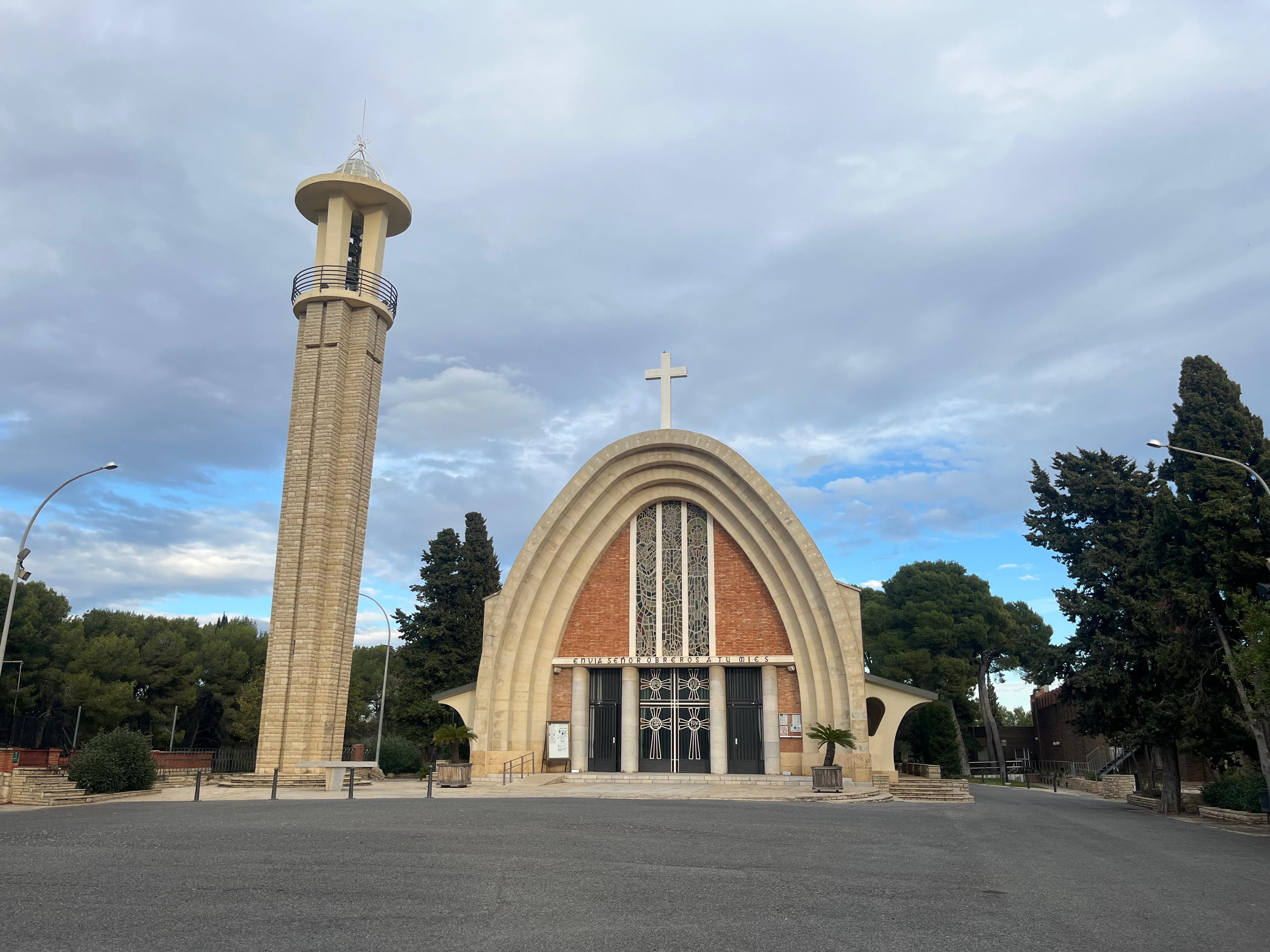
Santuari del Llorito (Shrine of Our Lady of Loreto)<p style="text-align: justify;"><strong>The Sanctuary of the Llorito, or Hermitage of Our Lady of Loreto</strong>, is located on the Morisques mountain, northeast of Tarragona, in a wooded area near the city. Founded around 1552 by the priest Pere Mir after a trip to Italy, it became established as a center of Marian worship, with processions and rogatives, especially to ask for rain. Over the centuries, the sanctuary suffered destruction during the Reapers' War and the French War, and was rebuilt several times, with significant renovations in the 18th and after the 19th centuries.</p> <p style="text-align: justify;">The modern reconstruction begun in 1957 and blessed in 1964 gave it its current appearance: central nave with semicircular apse, parabolic arch and 26-meter lighthouse tower, with contemporary influences and inspiration from the patron saint of aeronauts. Since 1970, the Rogationist Fathers have guarded the sanctuary and manage religious, spiritual and social activities. The area also stands out for its integration into the <strong>Tarragona Green Belt</strong>, with recreational areas, reforestation areas and historic paths. In addition, the area preserves quarries with Roman, medieval and modern exploitation, providing an archaeological and heritage value that combines religious, cultural and historical significance within the urban and natural landscape.</p>https://rutes-content.tarragona.cat/en/santuari-del-lloritohttps://rutes-content.tarragona.cat/@@site-logo/logo_aj_tgna.png
Santuari del Llorito (Shrine of Our Lady of Loreto)
<p style="text-align: justify;"><strong>The Sanctuary of the Llorito, or Hermitage of Our Lady of Loreto</strong>, is located on the Morisques mountain, northeast of Tarragona, in a wooded area near the city. Founded around 1552 by the priest Pere Mir after a trip to Italy, it became established as a center of Marian worship, with processions and rogatives, especially to ask for rain. Over the centuries, the sanctuary suffered destruction during the Reapers' War and the French War, and was rebuilt several times, with significant renovations in the 18th and after the 19th centuries.</p> <p style="text-align: justify;">The modern reconstruction begun in 1957 and blessed in 1964 gave it its current appearance: central nave with semicircular apse, parabolic arch and 26-meter lighthouse tower, with contemporary influences and inspiration from the patron saint of aeronauts. Since 1970, the Rogationist Fathers have guarded the sanctuary and manage religious, spiritual and social activities. The area also stands out for its integration into the <strong>Tarragona Green Belt</strong>, with recreational areas, reforestation areas and historic paths. In addition, the area preserves quarries with Roman, medieval and modern exploitation, providing an archaeological and heritage value that combines religious, cultural and historical significance within the urban and natural landscape.</p>