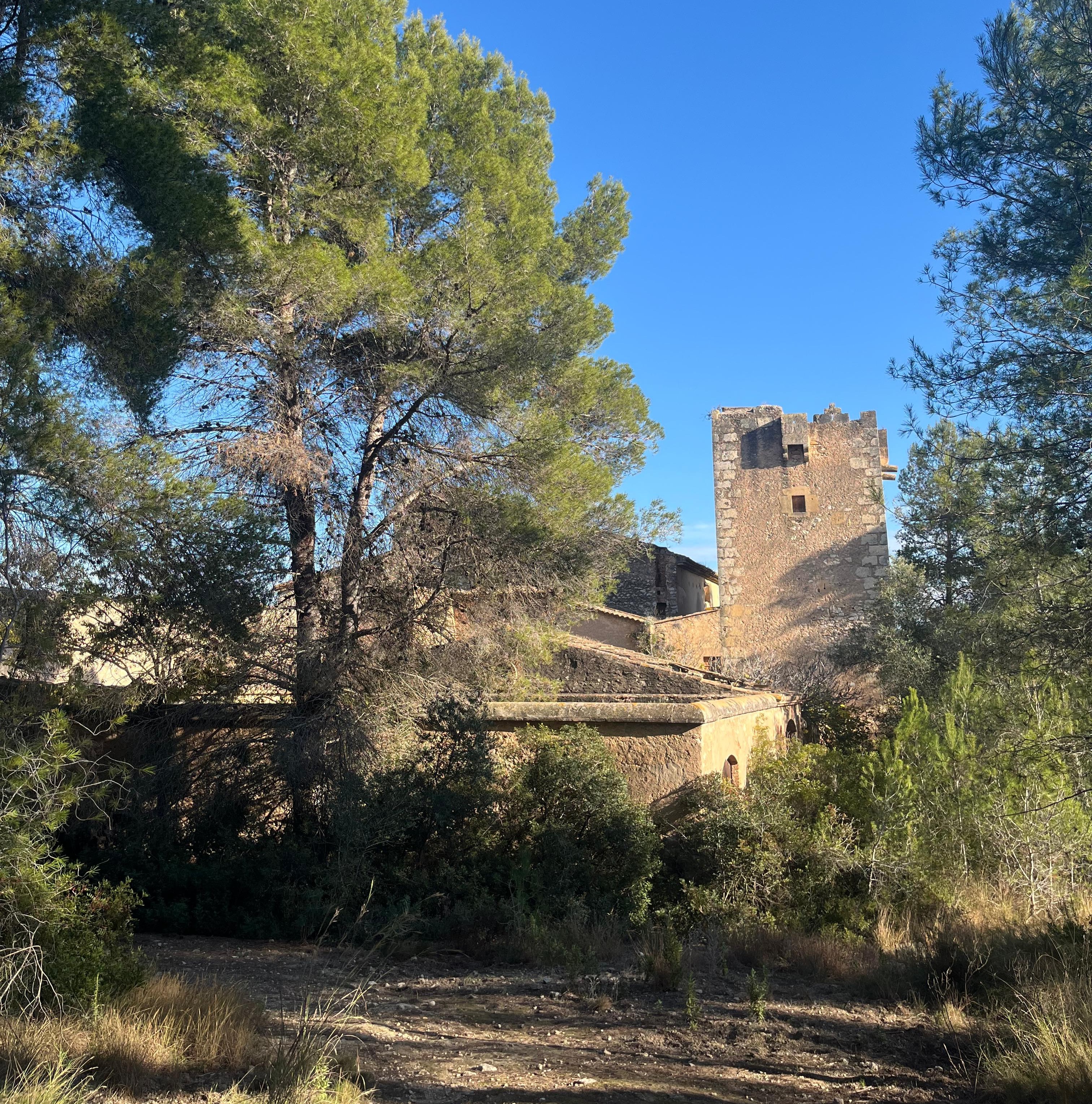
Mas de la Creu<p>The history of <strong>Mas d’en Sorder</strong> is best understood through the people who lived there. The first documented owners belonged to the Juncosa family, one of the lineages that, in the middle of the Middle Ages, promoted the repopulation and cultivation of the territory. Their life revolved around the farmhouse and the defensive tower that guaranteed safety against the dangers of the coast.</p> <p>Over time, new families took over. In the 17th century, the farmhouse appears registered in the name of Pere Puig Roig, representative of generations of farmers who worked these lands, took care of the crops and kept the agricultural activity of the area alive.</p> <p>At the beginning of the 20th century, Mas d’en Sorder changed hands and also its destiny: a new family, with greater economic power, converted the old farmhouse into an elegant summer residence. The commission fell to the architect Josep Maria Pujol de Barberà, who designed a spectacular modernist extension with a dome, porticoed gallery and refined decoration.</p> <p>Today, although the building is in disrepair, the memory of all these families remains present.</p>https://rutes-content.tarragona.cat/en/mas-de-la-creuhttps://rutes-content.tarragona.cat/@@site-logo/logo_aj_tgna.png
Mas de la Creu
<p>The history of <strong>Mas d’en Sorder</strong> is best understood through the people who lived there. The first documented owners belonged to the Juncosa family, one of the lineages that, in the middle of the Middle Ages, promoted the repopulation and cultivation of the territory. Their life revolved around the farmhouse and the defensive tower that guaranteed safety against the dangers of the coast.</p> <p>Over time, new families took over. In the 17th century, the farmhouse appears registered in the name of Pere Puig Roig, representative of generations of farmers who worked these lands, took care of the crops and kept the agricultural activity of the area alive.</p> <p>At the beginning of the 20th century, Mas d’en Sorder changed hands and also its destiny: a new family, with greater economic power, converted the old farmhouse into an elegant summer residence. The commission fell to the architect Josep Maria Pujol de Barberà, who designed a spectacular modernist extension with a dome, porticoed gallery and refined decoration.</p> <p>Today, although the building is in disrepair, the memory of all these families remains present.</p>