Roman Circus<p>The <strong>Circus of Tarraco</strong> is one of the best-preserved spectator buildings in the Roman West, largely due to its integration into the medieval and modern urban fabric. Built in the late <strong>1st century AD</strong> during the reign of Emperor <strong>Domitian</strong>, this colossal venue —approximately <strong>350 meters</strong> long— was designed for chariot racing (<em>ludi circenses</em>), the most popular spectacle of the era. Quadrigae, pulled by four horses, had to complete seven laps around the central <em>spina</em> in an extreme speed competition where crashes or <em>naufragia</em> were frequent. Unlike in other cities, <strong>Tarraco's</strong> circus is located inside the city walls to link the political representation area with the lower town. Today, visitors can walk through the impressive <strong>barrel vaults</strong> that supported the seating (<em>cavea</em>) and imagine the roar of the <strong>30,000 spectators</strong> who once filled the arena.</p>https://rutes-content.tarragona.cat/en/circ-romahttps://rutes-content.tarragona.cat/@@site-logo/logo_aj_tgna.png
Roman Circus
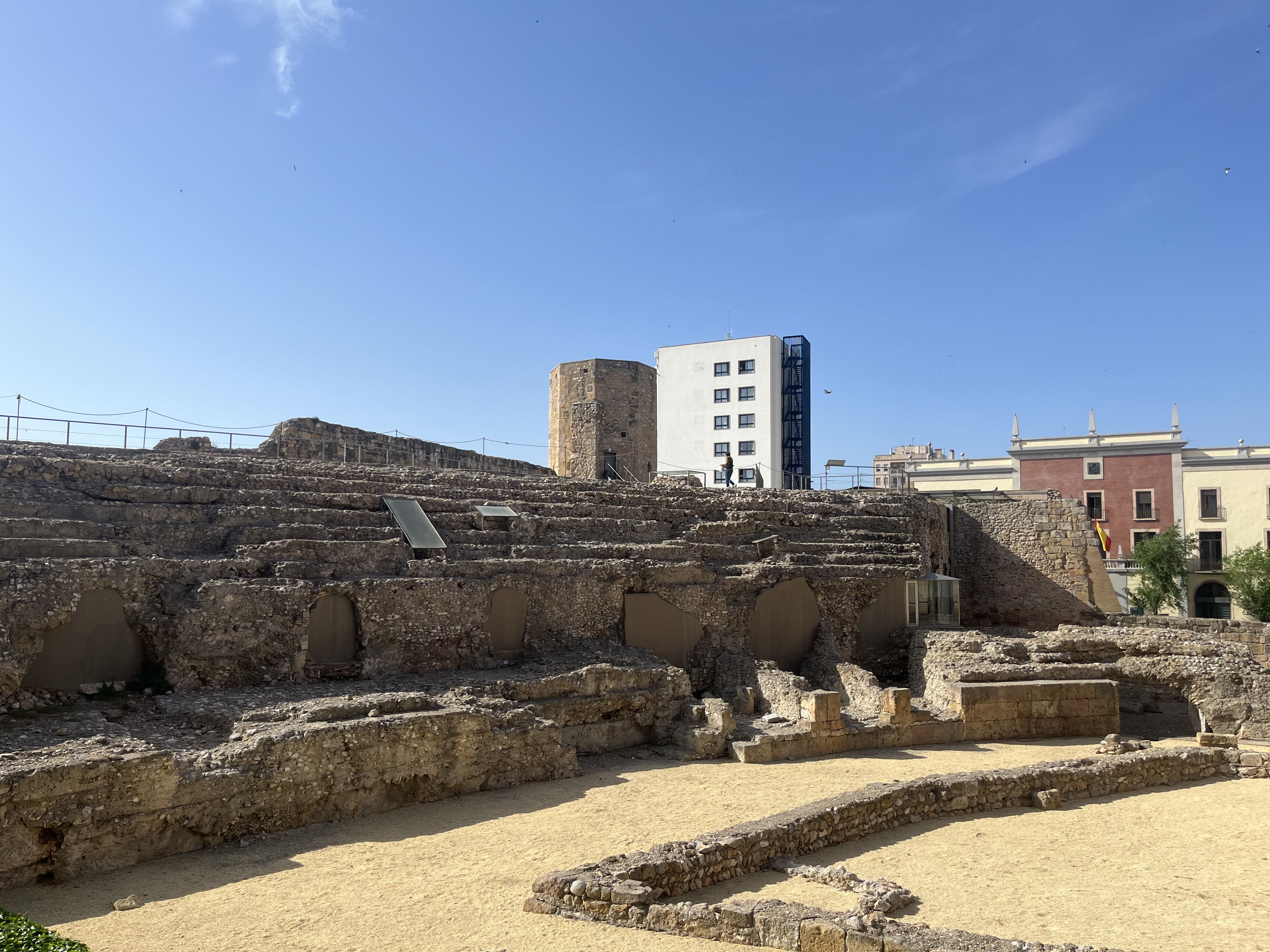
<p>The <strong>Circus of Tarraco</strong> is one of the best-preserved spectator buildings in the Roman West, largely due to its integration into the medieval and modern urban fabric. Built in the late <strong>1st century AD</strong> during the reign of Emperor <strong>Domitian</strong>, this colossal venue —approximately <strong>350 meters</strong> long— was designed for chariot racing (<em>ludi circenses</em>), the most popular spectacle of the era. Quadrigae, pulled by four horses, had to complete seven laps around the central <em>spina</em> in an extreme speed competition where crashes or <em>naufragia</em> were frequent. Unlike in other cities, <strong>Tarraco's</strong> circus is located inside the city walls to link the political representation area with the lower town. Today, visitors can walk through the impressive <strong>barrel vaults</strong> that supported the seating (<em>cavea</em>) and imagine the roar of the <strong>30,000 spectators</strong> who once filled the arena.</p>